Features

  • Endurance and Ecology in Motion: The Shared Work of Course, Community, and Care

    Trail Dynamics, Stewardship, and the Work Behind the Distance

    Like many other ultramarathon events in challenging mountainous environments, Grindstone has never been a race that unfolds without difficulty. Since its first running in 2008, the event has required both runners and organizers to step fully into the rugged and verdant character of the Allegheny Mountains. That character is not uniform but layered: long ascents that stretch patience as much as strength, technical descents that punish inattention, forest corridors where dense foliage obscures distance, and pastoral valleys that remind us of the human life sustained at the edge of the wild. Variety constitutes the texture of Grindstone, and it ensures that each race distance in its current iteration is distinct yet bound together by the same mountain environment.
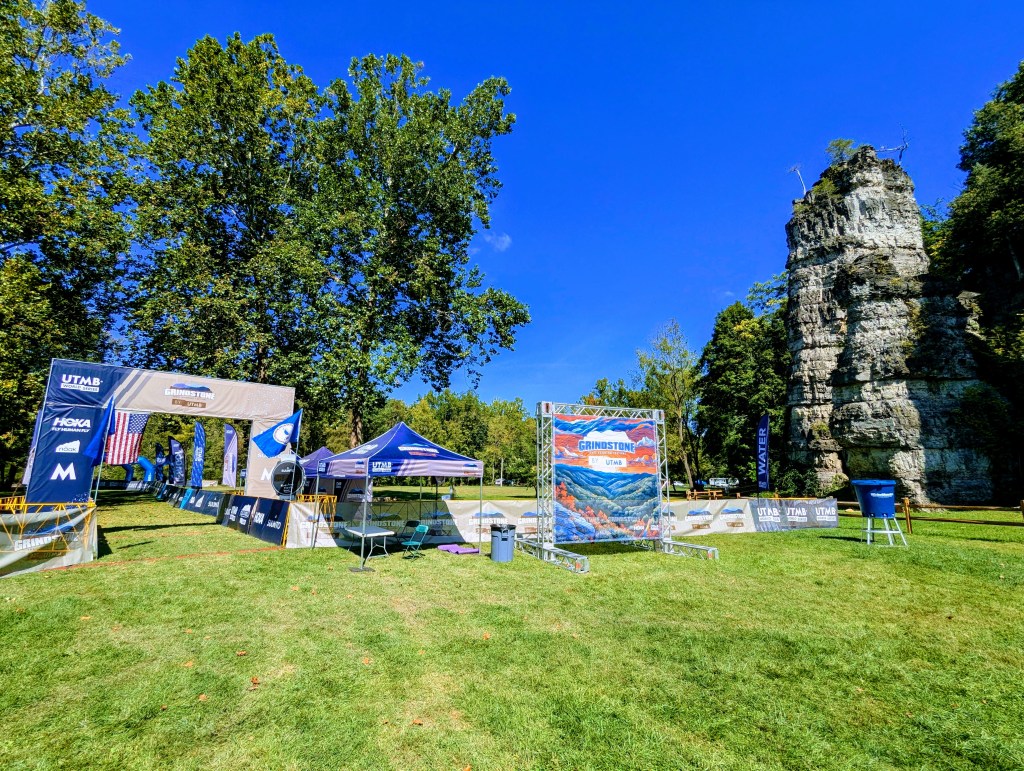
    Start/finish line of Grindstone at the Natural Chimneys Park.

    To recognize this variety is also to acknowledge the work behind it. Trails are never static. They shift with storm, season, and use, and they require sustained care in order to remain passable. Every mile of Grindstone reflects not only the natural and cultural ecology of the Alleghenies but also the collective labor that prepares it: volunteers cutting back overgrowth, removing blowdowns, repairing eroded segments, and taking extreme care to mark intersections so that the way is clear even when fatigue dulls awareness. These efforts make possible what would otherwise remain inaccessible. Research increasingly demonstrates that organized trail events, such as Grindstone, play a vital role in keeping trails open, particularly in areas that receive limited visitation. Far from causing harm, they often have a net-positive effect on both the trail system and the surrounding environment (see Trail Impact Study), not to mention the local and regional economies. Grindstone is therefore not only a test of endurance but also an expression of stewardship, linking runners to the unseen work that holds the course together.

    For those preparing to race, this also means approaching Grindstone not as a uniform surface but as a sequence of transitions. Moving from pavement to dirt road, from gravel connectors to singletrack, runners must learn to adjust stride and cadence, as well as psychological readiness and expectation. The course demands attentiveness to terrain as much as to effort, and success comes in part from recognizing that the race is constituted by variety rather than monotony. To prepare well is to anticipate those shifts and to understand that endurance at Grindstone is measured not by consistency alone but by the capacity to adapt.

    From my Race Director’s perspective, success at Grindstone is therefore never reduced to individual preparation alone. The race is embedded in an evolving landscape of logistics, stewardship, and collective responsibility. Each year brings not only the familiar terrain of the Alleghenies for us, but also new considerations shaped by growth, feedback, and environmental contingency. Course updates and operational refinements (see below) should be read in that light: as modest adjustments that carry significance precisely because they sustain the balance between rugged challenge and responsible care.

    Since its beginning, Grindstone has been about caring for trails as much as promoting competition. The race tests runners against climbs, miles, and weather, yet it also reminds us that endurance is tied to stewardship.

    To run here is not only to pursue a finish line but to contribute to the ongoing care of the mountains and communities that make such an event possible.
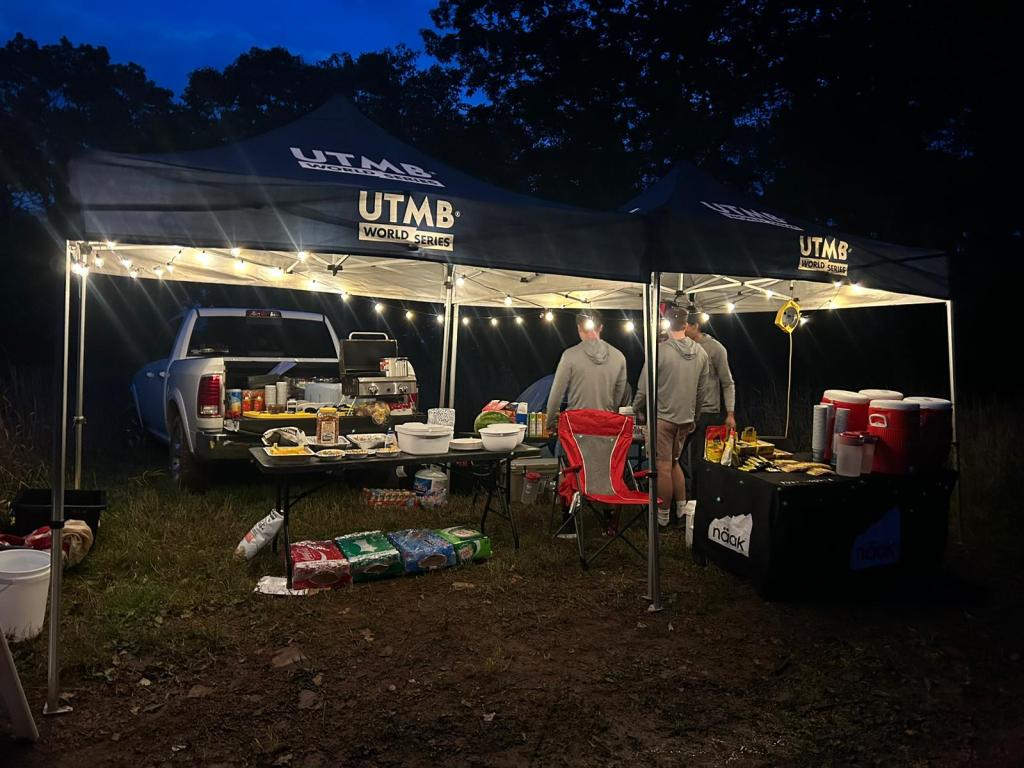
    Little Bald Aid Station at Grindstone.

    The focus of this blog is to help runners understand how Grindstone’s course is shaped by both natural conditions and human care. From surface variety to trail stewardship, the goal is to offer perspective that prepares entrants not only for the challenges of the Alleghenies but also for the shared work that makes the race possible. I hope the content of this blog will help you better understand what to expect and prepare more fully for your own Grindstone journey.

    2025 Course Updates and Enhancements

    For 2025, the course routes remain the same as last year. The terrain itself offers plenty of challenge, and consistency gives runners a clearer sense of what to expect. Still, a few refinements are worth noting:

    • Additional portos placed at accessible aid stations.
    • Female-only portos at the start/finish area.
    • Trail Sisters approval affirms the festival’s commitment to inclusivity.
    • More variety in aid station food, especially for longer distances.
    • Increased shuttle service for dropped runners.
    • A new spectator guide will help crews and families follow the race.
    • Improved on-course signage will provide greater clarity.
    • Expanded live music on stage at the Expo basecamp.
    • More food trucks and a coffee vendor will serve attendees at the Expo basecamp.
    • Start/finish line orientation to showcase Natural Chimneys as a backdrop for photos.
    • A UTMB Kids Zone for family-friendly engagement.
    • A new post-race food vendor will provide fresh options for race finishers.

    Each change is practical in scope yet significant in impact, refining the race experience without diminishing the challenge that defines Grindstone.
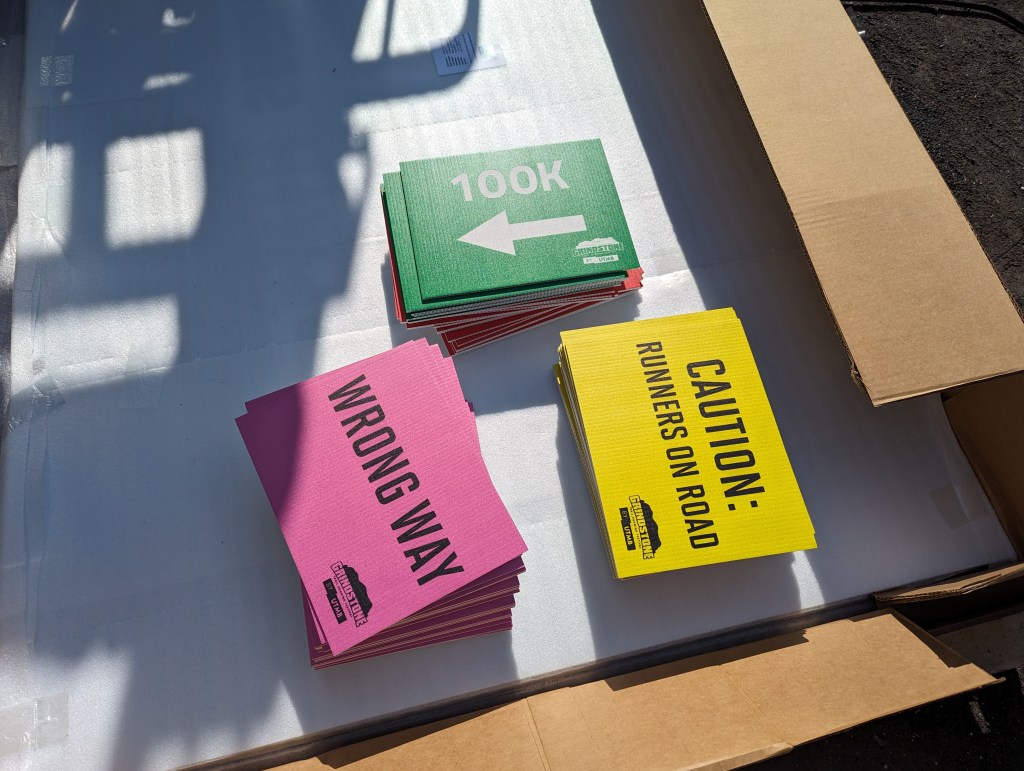
    Additional course marking signage.

    While we cannot address every preference or feedback comment, we strive to make thoughtful adjustments each season. Too many large-scale changes at once would be more disruptive than helpful, and our goal is to balance responsiveness with continuity.

    Weather, Uncertainty, and Local Preparedness

    Last year’s storms were a clear reminder that no outdoor event unfolds entirely under human control. Severe thunderstorms swept through the area, producing the most significant weather event in a decade for Augusta County, Virginia. High winds and heavy rain forced immediate adjustments, from pausing expo activities to extending course cutoffs.

    Storm damage to expo tents at the 2024 Grindstone

    And while the potential impact of unpredictable weather is part of any outdoor event, it is even more so in ultradistance races such as the 100K and 100M. Over extended hours and multiple nights, conditions can shift: sun to storm, heat to chill, calm to wind. To endure well is not to avoid or despise these moments but to accept them as part of the experience. It is important not to let poor weather conditions taint your race or overall experience, but to recognize them as elements that reveal endurance in its fullest sense (#sufferbetter is what comes to mind).

    Over the years, Grindstone has seen both sides of this reality. Some years have unfolded under clear skies and cool autumn air. Other years have brought the opposite, including a one-week delay caused by a hurricane and even a full cancellation during a federal government shutdown. While we hope for calmer skies this September, preparation cannot rest on chance. Our partnership with local emergency management remains central, providing the capacity to respond quickly when conditions shift. Their readiness and capability, together with the adaptability of staff and volunteers, remains central to the event’s backbone. For Grindstone, unpredictability is not an interruption but a defining feature of endurance, and learning to embrace that reality is part of preparing well for the journey.

    Trail Work, Permitting, and Stewardship

    What happens underfoot on race day is only possible because of the work that continues year-round. For eighteen years, Grindstone has relied on sustained investment in trail care. This season alone, volunteers have logged more than 800 hours and cleared over 65 miles of trail, and that effort continues up until race week. Taken over the life of the event, the scale is even more striking: roughly 1,200 hours of volunteer work each year, multiplied across two decades, amounts to well over 20,000 hours devoted to keeping these trails race-ready as well as open and accessible for all who seek them.
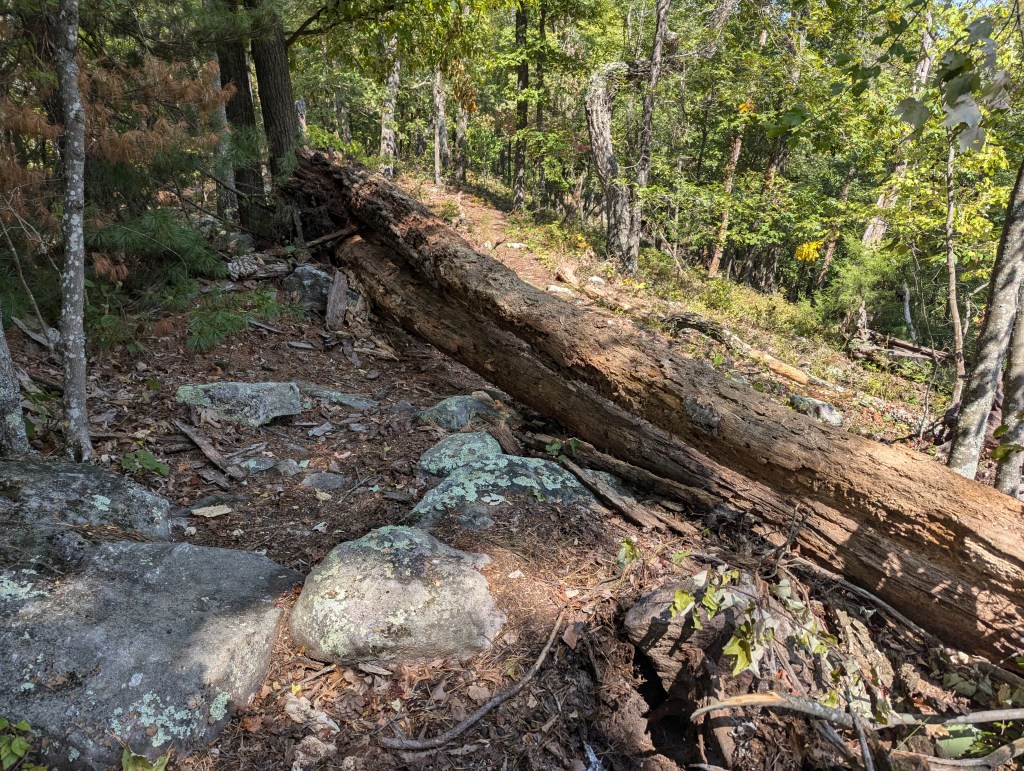
    Before trees are cleared.

    The North River Ranger District of the U.S. Forest Service contributes critical support, particularly in removing large blowdowns. We also work alongside the Shenandoah Valley Bike Coalition, whose members maintain many of the same routes.

    Stewardship in the Alleghenies is not divided by sport but shared as a common trust, and organized events such as Grindstone often help ensure that trails remain open in areas where visitation would otherwise be low. Far from being a burden, I believe the race generates momentum for long-term care.
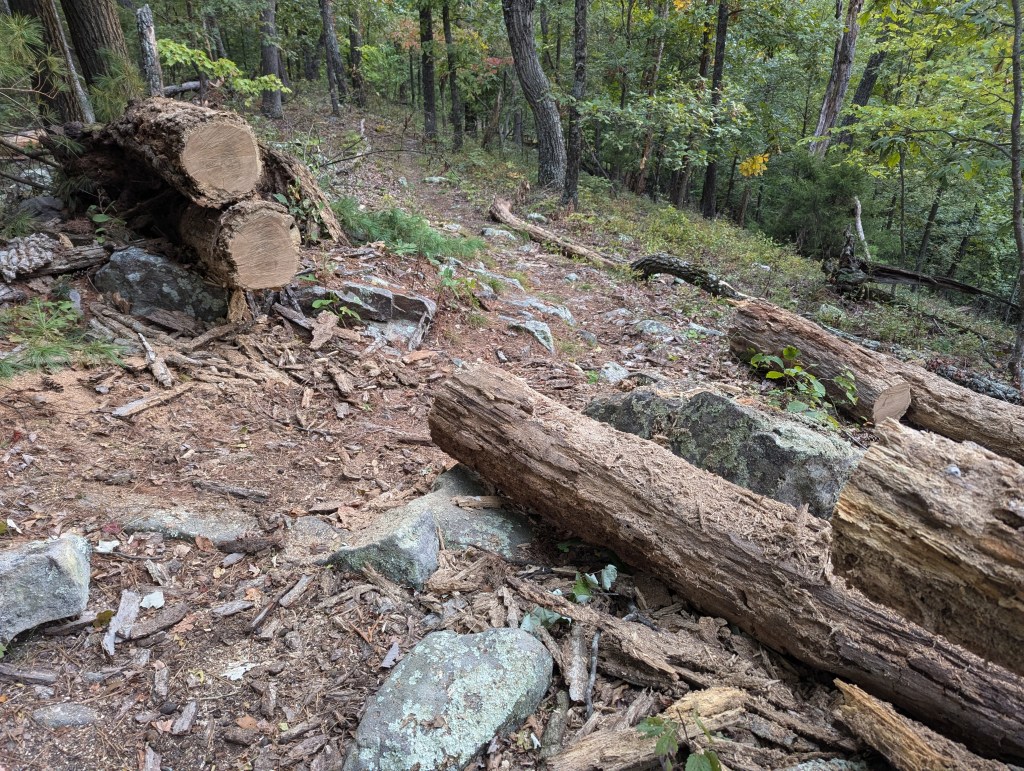
    After trees are cleared.

    Permitting further shapes the course. At times, this requires sections that fall outside a race director’s preference for a continuous and pure trail experience. One example is Ramsey’s Draft Wilderness, a federally protected area established under the 1964 Wilderness Act and managed today as part of the George Washington National Forest (see U.S. Forest Service, Ramsey’s Draft Wilderness).

    The Act limits group size and prohibits organized events of any kind within its boundaries, which is why the Grindstone 100-mile and 100K courses include the gravel road section between Magic Moss Aid Station and Camp Todd Aid Station. No groups larger than ten should ever be in a designated wilderness area. These constraints are not obstacles but reminders. We choose to honor both the letter and the spirit of the law, recognizing that to run here is to respect the legal frameworks that safeguard wild places.
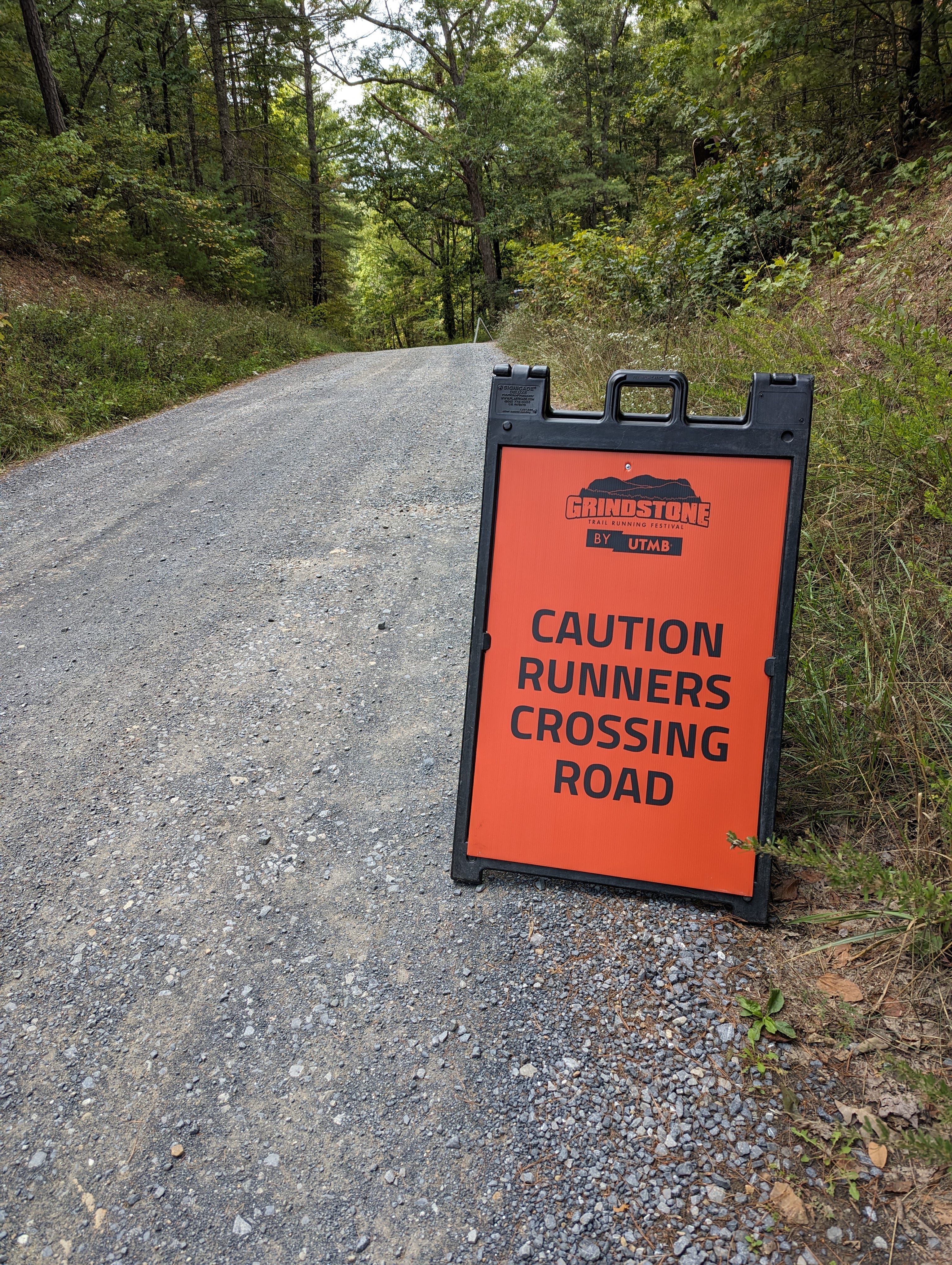
    Sign cautioning traffic that runners are crossing the road. One of many similar signs on the grindstone course.
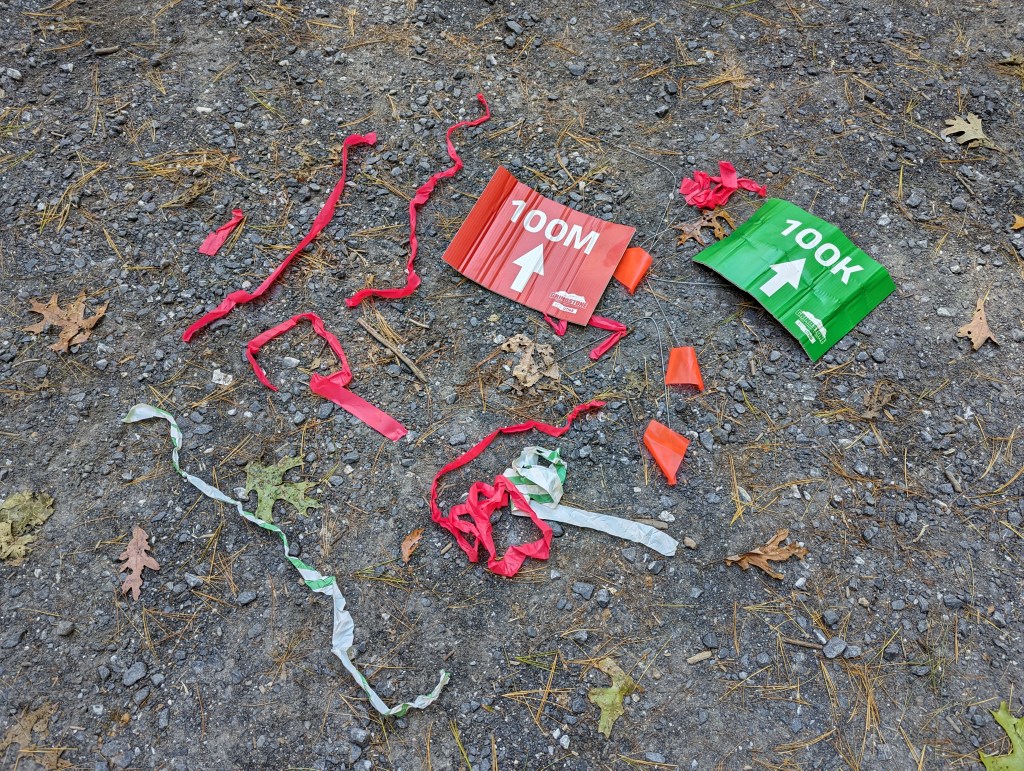
    Course markings that were missed are cleaned up.

    Course marking and cleanup are also collective responsibilities. We have the best volunteers and they give their time to make the route clear and to restore it after the event, though an occasional ribbon or sign may be missed.

    In a race of this scale, perfection is neither possible nor the true measure of care. What matters is the shared willingness to step in rather than stand back. We ask runners, too, to take part in this care. Picking up debris, adjusting a misplaced marker, or lending a hand along the way affirms that Grindstone is sustained not only by organizers but by its community. To critique from a distance is easy; to contribute on the ground is harder, yet it is that work which ultimately makes the experience possible. The event is therefore both a competition and a form of stewardship, extending the life of the very trails that sustain us all. Its continuance is a beautiful thing when cared for, inviting runners from around the world to share in the rugged beauty of the Allegheny Mountains and the hospitality of the surrounding communities.

    The work of trail care and course cleanup extends directly into how the route is experienced on race day. Markings are placed with care and intention, yet no system is immune to wind, weather, or human error.
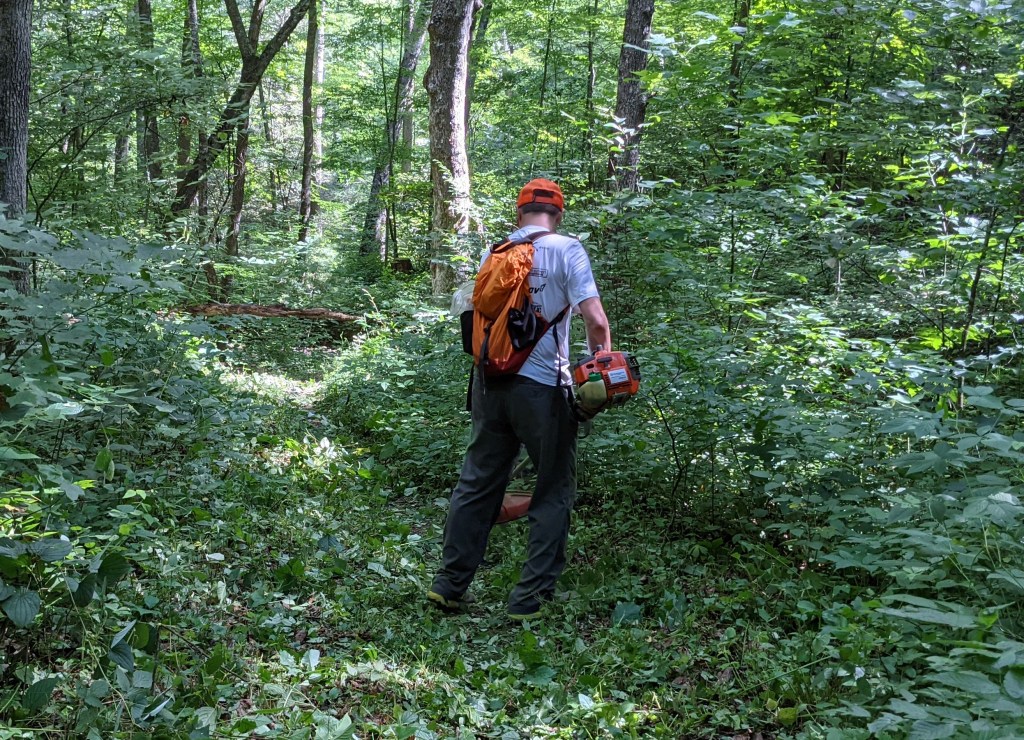
    Cutting weeds on the Grindstone course.

    At times, it is even more deliberate: unfortunately, it is not uncommon for our Course Director to deal with sabotage, as individuals remove or tamper with markings. His crew responds by covering the course repeatedly, double- and triple-checking critical intersections to reduce confusion. The U.S. Forest Service law enforcement team also provides valuable support, helping safeguard the integrity of the route. What matters most, however, is the runner’s attentiveness, knowing that markings are there to guide but not to replace awareness. In this way, navigation becomes part of the shared responsibility as well, linking volunteers’ preparation with each runner’s capacity to read the course and move wisely through wild country.

    Reading the Course and Following Its Markings

    Survey feedback often reflects a simple truth: expectations are shaped by geographic awareness and sense of place. Runners accustomed to open terrain may find Allegheny/Grindstone trails dense, enclosed, and at times disorienting. For that reason, the course is marked heavily and intentionally, with redundancies built into the system. Even so, no runner should continue for more than a quarter mile without confirmation. If markings are unclear, backtracking is always safer than assuming. Course markings are meant to support, not to replace, attentiveness. Headlamps in the night, fatigue late in the race, or the distraction of company can make it easy to miss a ribbon or turn. Success here requires as much vigilance in navigation as in pacing.
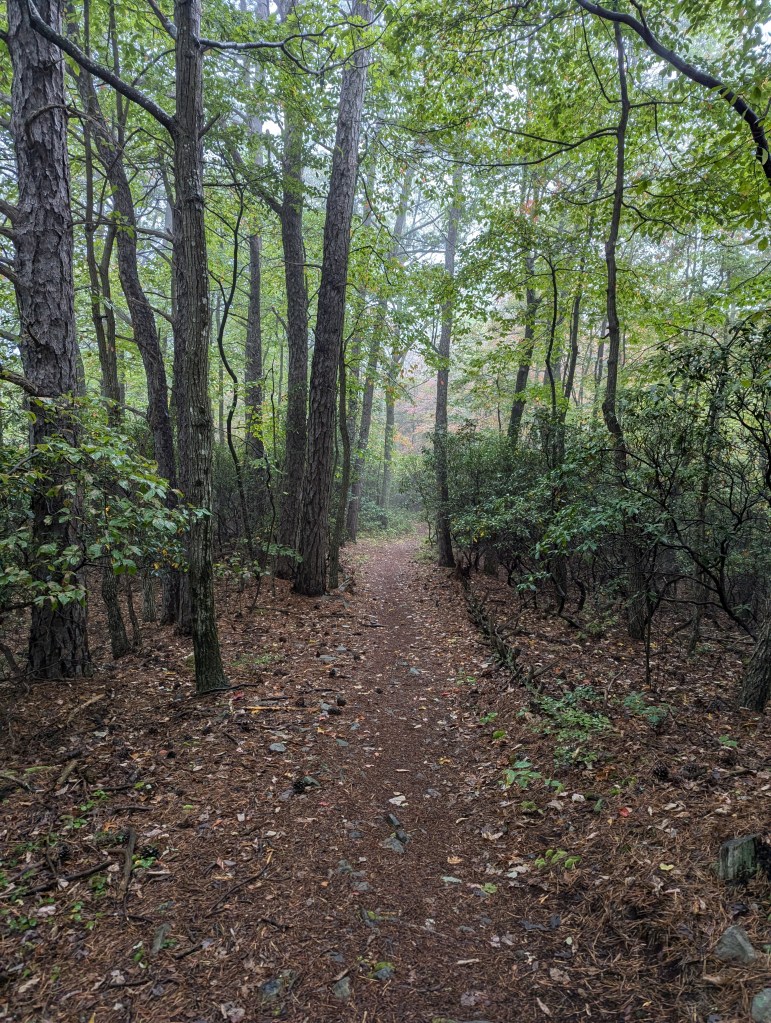
    Grindstone course on Timber Ridge.

    Likewise, beauty here is not measured only by alpine ridges or sweeping vistas, as it may be in above-treeline landscapes around the world. In the Alleghenies, it is found in hardwood corridors where the canopy filters autumn light, in layered ridgelines that unfold gradually, in mossy drainages that carry the memory of storms, and in pastoral approaches that link mountain to valley.

    The colors of fall, shifting by the hour and the ridge, further remind runners that the landscape is alive and changing. Hence, to run Grindstone is to embrace a broader definition of trail beauty: one that privileges variety, subtlety, and texture as much as grandeur.
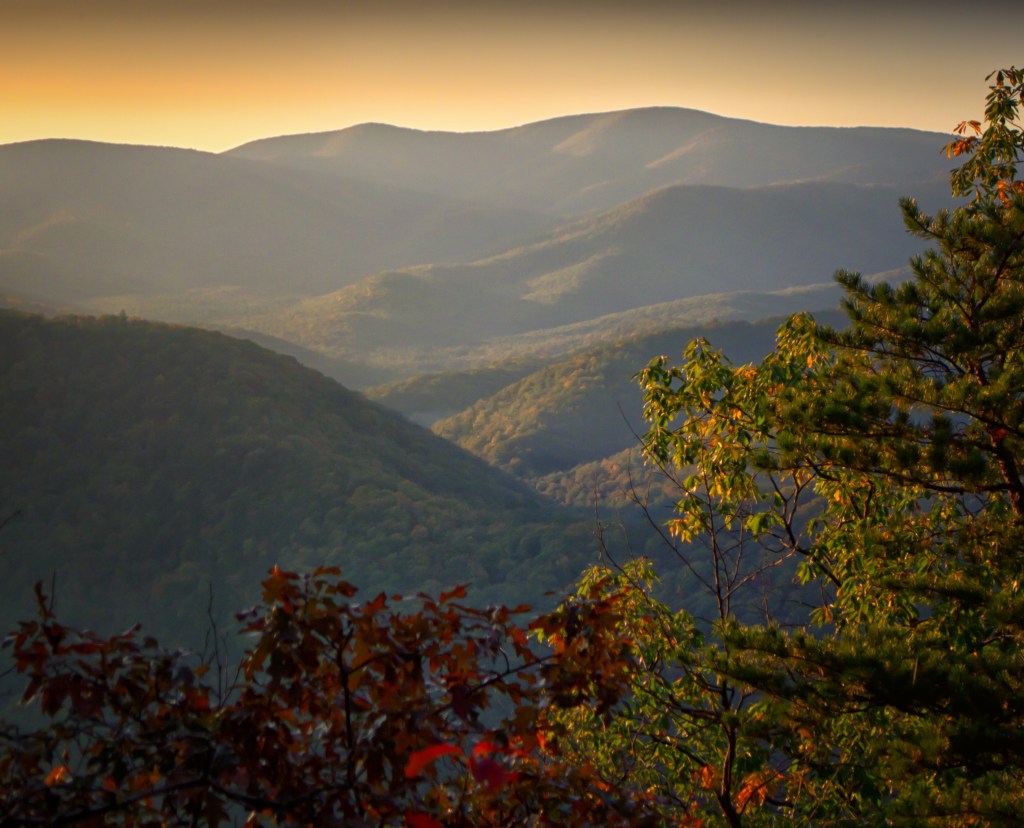
    Overlooking the Grindstone courses.
    Photo Credit: Geoffrey Baker, https://www.bakerfineartphotography.com

    The character of Grindstone is, moreover, not defined by a single type of trail but by the shifting mix of surfaces that runners encounter. Pavement, gravel, dirt, and singletrack each appear in measure; at times they are welcomed, while at other moments they must simply be endured. Nevertheless, they remain integral to the larger design. To recognize this variety is, therefore, to prepare for it, and to see in it not a distraction but part of the race’s distinctive texture.

    Surface Variety Across Distances

    Each course includes a blend of paved, gravel, dirt, and singletrack surfaces. This mix is not incidental; rather, it reflects both the geography of the region and the logistical requirements of connecting a race of this scale to the National Forest. In this part of the Appalachian Mountains, there are few venues capable of accommodating the volume of runners that a UTMB World Series race attracts. Natural Chimneys Park is uniquely suited for this purpose, offering both the space for a festival atmosphere and proximity to miles of great trail running, even if it sits a short distance from immediate access to the National Forest. Since no facility in the area backs directly against forest boundaries, connectors provide the necessary link into the forest. Consequently, every distance carries its own distribution of terrain, and runners must adapt accordingly.

    21K Overview

    • Paved: ~6 miles
    • Trail/Dirt Double Track: ~7 miles

    Although the shortest race carries more road by proportion, it nonetheless offers a clear introduction to Grindstone’s climbing profile and serves as an ideal entry point for those new to trail racing.

    50K Overview

    • Paved: ~6 miles
    • Dirt/Gravel: ~7.5 miles
    • Trail: ~19 miles

    The 50K weaves together extended trail sections and dirt-road connectors. As such, it demands attentiveness to shifting terrain and rewards those who maintain rhythm across changes in surface.

    100K Overview

    • Paved: ~6 miles
    • Gravel: ~12.5 miles
    • Dirt Double Track: ~7.5 miles
    • Trail: ~39 miles

    The 100K course is weighted toward singletrack, yet the inclusion of gravel and double-track sections requires runners to adapt continually as the terrain shifts. These connectors are not incidental; they are shaped by both geography and land management, reminding runners that Grindstone is defined by transitions as much as by climbs and descents.

    100M Overview

    • Paved: ~6 miles
    • Gravel: ~15 miles
    • Dirt Double Track: ~17 miles
    • Trail: ~66 miles

    The flagship race remains predominantly singletrack, but transitions test a runner’s adaptability as much as their endurance.

    In sum, the distances reveal that no part of Grindstone is one-dimensional. Each race requires runners to adjust stride and mindset continually. For those preparing to toe the line, this means training across multiple surfaces, planning gear that can handle variability, and pacing with adaptability in mind. Indeed, the strength of the event lies in this very variety, which constitutes both the rhythm of the race and the identity of Grindstone itself.
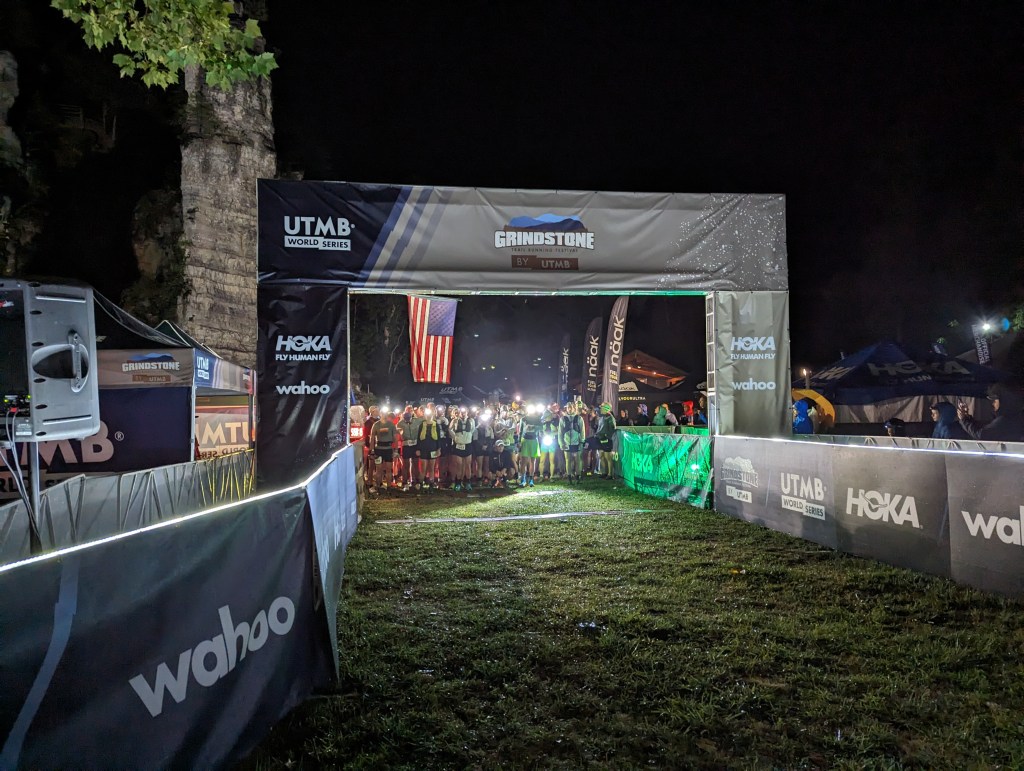
    Grindstone 100k start line.

    A Collective Effort

    In conclusion, Grindstone began as a race, a 100-mile test of patience, strength, and resolve. Over time it has become something more: a festival with multiple distances and a place in the global UTMB World Series, yet still grounded in the same community, ecology, and ethos that shaped its beginnings. To participate is to join a shared labor, one that includes clearing trails, marking courses, delivering aid, and carrying forward a tradition of endurance rooted in care for place and people.

    When you toe the line in September, you step into more than a timed competition. You step into an ongoing work that preserves trails, sustains communities, and invites runners from around the world to discover what it means to endure in the Alleghenies. The race is, at once, competition and collaboration, personal challenge and collective stewardship. I am convinced its future will be sustained not by any single effort but by the willingness of many to contribute. The best way to sustain the ultra and trail community is to be an active participant in that shared work, and we invite you to join us in carrying Grindstone forward while strengthening the future of our sport.


    This post is original content created by Compass & Cause, LLC. No part may be reproduced or shared without written permission. © 2025 Clark Zealand. All rights reserved.
  • What Endurance Demands: Returning to the Grindstone Ethos

    The intentional design of a race embedded in season, terrain, and place

    Fresh from completing my Ph.D. in 2007, I sought ways to stay grounded in the field while building an academic career. At the same time, as a young father of a child with profound autism, and the demand of a life that comes with it, I recognized that my most competitive racing years were likely behind me. The sport had shaped much of my life, and I felt a growing responsibility to give something back. That same year, I began laying the groundwork for what would become Grindstone. In 2008, the first runners stood at its start line. The vision was shaped by both absence and possibility, rooted in the desire to offer others the kind of meaningful experience the sport had long given me. At that time, there were a few smaller, unofficial 100-mile efforts in the region, but nothing with the scope, scale, and logistical structure that Grindstone would require. For its first decade, the race took place in October, aligning perfectly with the mountain foliage at its seasonal height: air sharpening with each passing day, forests igniting in colors both momentary and enduring, and light that turned landscapes into layered silhouettes. In later years, permitting requirements forced the event into September. That shift was not a choice but a necessity to ensure the race could continue. Even so, the current course still holds the essence of that original vision. It remains a sustained encounter with the region’s distinctive ecology and topography at a time when both terrain and season are in motion.

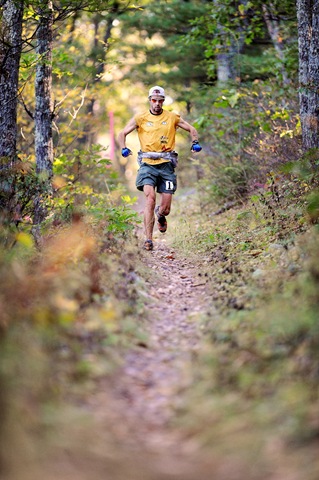
    Karl Meltzer on his way to a course record in 2009.

    From the beginning, I wanted Grindstone to be both mountainous and personal. The course was never meant to be simply a route from start to finish. It was intended as an immersive framework for experiencing the ecology of the Alleghenies, a distinctive range within the Appalachian Mountains, in a way that could not be replicated elsewhere.

    The aim was to create a genuine adventure within the structure of a 100-mile race, one that drew its character from both the landscape and the sustained effort it required. These mountains contain some of the longest sustained climbs on the East Coast, each one altering rhythm and demanding a recalibration of effort. Switchbacks are rare, gradients are honest, and the trail surface often requires full attention. The aim was not to design a race that rewarded only physical strength. It was to create a setting where endurance could be understood as the interplay between body, mind, and environment. Grindstone was built on the belief that the most meaningful miles are the ones that engage all three.

    The decision to begin the 100-miler at 6:00 p.m. was deliberate. I wanted every runner, regardless of ability or pace, to pass through at least one full night on the course. Night running changes the experience in ways that daylight cannot. Vision narrows to the reach of a headlamp, sounds take on new clarity, and the mind must adjust to a slower and more deliberate perception of time. Moving through the dark requires both patience and trust, yet at times it also invites a kind of reckless abandon. In that space, the runner’s relationship to the trail changes. Many races start in the early morning, sometimes allowing the fastest athletes to finish before nightfall. Grindstone was never meant to offer that option. Only later did I learn that the original UTMB Mont-Blanc 100 (in Chamonix, France) also began at 6:00 p.m., a coincidence that underscores the shared belief that night is not simply a barrier to overcome but an essential element of the experience.

    Starting and finishing at a different venue for the first fifteen years, Grindstone followed an out-and-back format. The design carried its own character and rhythm. The outbound miles were marked by anticipation and solitude, with runners settling into their own effort as the course unfolded. The return miles brought shared recognition, with brief words or nods exchanged between runners that conveyed a mutual understanding of the work already done and the distance still ahead. In 2023, when Grindstone joined the UTMB World Series, the venue moved to Natural Chimneys Park to accommodate a larger field. This change brought necessary adjustments to the course, introducing new terrain and reshaping the route to fit the available access points. In some corners of the ultrarunning community, conclusions were drawn about the race’s direction without ever seeking to understand the intent behind these changes. The current course still carries runners across much of the original trail while adding equally striking sections that extend the race’s reach into other remarkable parts of the region. The intent remains the same: to provide a course that is difficult, beautiful, and worth the time it takes to move through it.

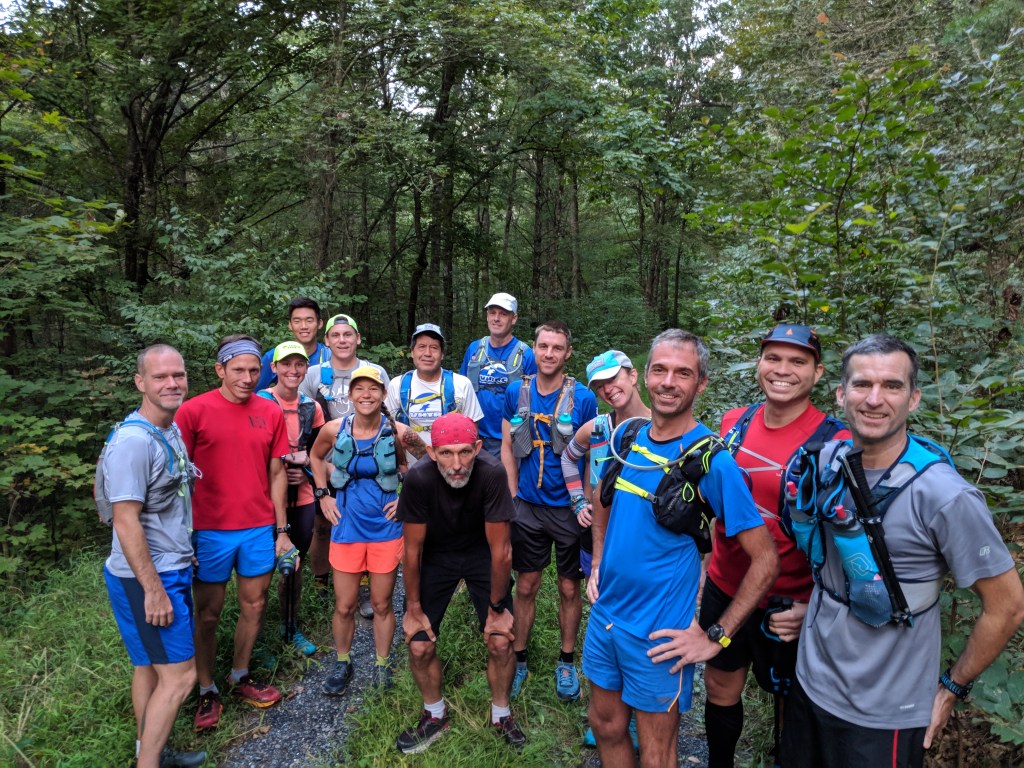
    Group training run on the Grindstone course, 2018

    Grindstone holds a distinct position within the UTMB World Series. It is, at present, the only race in the series located on the U.S. East Coast. This placement is not simply geographic novelty; it represents an encounter with a mountain range unlike any other in the series. The Allegheny Mountains are characterized by long, folded ridgelines, deeply set valleys, and an ecological richness that shifts subtly with changes in elevation. The grandeur here is not measured in sheer vertical relief or above tree-line vistas, but in the accumulation of distinctive features: the layering of ridges in soft light, the intricate patterns of rock and root beneath the foot, and the quiet persistence of trails that have been shaped by both human passage and the changing seasons. To run here is to enter a landscape that holds beauty in both the vast and the particular, where endurance is defined as much by attention as by physical capacity.

    Preparation for Grindstone requires more than a traditional training plan. Weekly mileage and vertical gain are useful metrics, but they do not fully capture what these courses will ask of you. With the exception of the 21K, each distance includes long, sustained climbs that require settling into a measured effort and maintaining it without interruption. Technical descents demand stability and concentration, especially when fatigue begins to accumulate. For the 100-mile race, hours of darkness arrive early and are unavoidable, while slower 100K runners may also encounter night running later in their race. All Grindstone courses contain a great deal of variety in surface, grade, exposure, and rhythm, which requires adaptability and the capacity to value each element for what it brings. Success here is not only about being physically prepared for the miles; it is also about being ready to engage with the complete spectrum of conditions that define the Grindstone experience.

    The course begins and ends on short stretches of pavement that connect Natural Chimneys Park to the national forest. In an ideal world, the course would move directly from the start line into the forest and remain on trails until the finish. These roads exist because no other venue in the region can host an event of this scale, and there is no alternative route into the mountains. While they are not the primary draw of Grindstone, they can be valued for what they offer. The choice is pragmatic, but it need not be seen as a compromise to endure reluctantly. These are small country roads, lined with family farms that have been worked for generations. The landscape here is pastoral rather than wild, yet it carries its own kind of beauty: fields tilled by hand and machine, fencelines shaped by decades of weather, barns that lean slightly from age but remain in use. If approached with the right frame of mind, these miles can offer a kind of narrative transition: from the structured geometry of farmland into the irregular contours of the forest, and eventually back again.

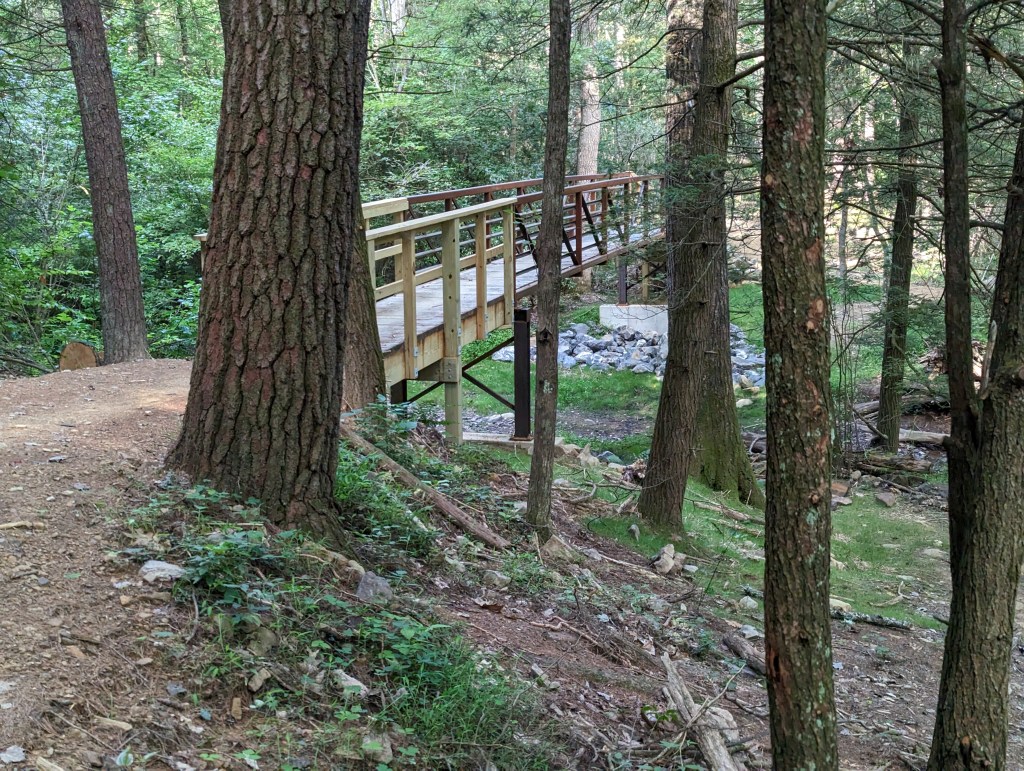
    New trail bridge just before the Wolf Ridge Aid Station

    The majority of the course remains what it has always been: technical singletrack, remote ridgelines, and forested valleys that feel far removed from contemporary urban environments. The short stretches of pavement or gravel are small in proportion to the whole and serve as connections rather than interruptions. They link runners to the trails ahead and to the communities that make the race possible. Seen in this way, the roads are part of the larger ecology of place, representing the human patterns that have existed alongside the mountain landscape for generations.

    The growth of ultrarunning in recent years has brought both opportunity and complexity. Larger events draw a more diverse and international field, which expands the community and deepens the level of competition. At the same time, growth can dilute the sense of connection and place that shaped the sport’s early years. Grindstone was founded to honor those roots, and that commitment remains unchanged. The race is intentionally embedded in the rhythms of its landscape, the character of its trails, and the traditions of the community that surrounds it.

    2024 Grindstone Trail Running Festival by UTMB start & finish line

    Adapting to a broader stage has required logistical adjustments and new partnerships, yet these changes have been approached with the aim of strengthening, rather than replacing, the event’s identity. In this way, Grindstone continues to hold space for both the scale of modern ultrarunning and the intimacy of a race shaped by its mountains, its season, and the people who make it possible.

    As the race draws near, the focus shifts from planning to presence. Grindstone is not an event that can be reduced to its profile map or aid station chart. It is a sequence of moments, each shaped by the terrain beneath your feet, the season surrounding you, and the community alongside you. The course invites both effort and observation, asking you to notice the variations in light, the movement of wind through the trees, the presence of fellow runners in shared silence or brief conversation, and the way your own thoughts change over time. In this way, preparation is not only about what you bring to the start line. It is about arriving ready to receive what the mountains, the trails, the people, and the season will give.

    Grindstone was created to offer more than a race. It began as a 100-miler rooted in place, season, and community, and (2025 is its 18th edition) it has grown into the Grindstone Trail Running Festival while holding to that same intent. Every part of the course, from open valleys to remote ridgelines, is part of that encounter. To run here is to accept that endurance is shaped by more than distance. It is defined by the willingness to engage with the terrain, the weather, the night, and the people who share the journey. The finish line is a marker of completion, yet the true measure of the experience is found in the miles that came before it and the way they remain with you long after the race is over.

  • Precision Matters: The Enduring Value of Attention to Detail

    How Detail-Oriented Habits Become Markers of Leadership

    In a culture increasingly driven by speed, the discipline of slowing down to do something thoroughly may feel antiquated. Nonetheless, attention to detail remains one of the most salient indicators of professionalism, care, and long-term success. Whether reviewing a report, preparing a proposal, managing a project, or hosting an event, precision matters. It is not merely about catching typos or fixing formatting. Rather, it signals something more enduring: credibility.

    Attention to detail is not reserved for perfectionists. Nor is it synonymous with overthinking. It is, at its core, a posture of respect, for your work, your colleagues, and the people impacted by what you create. Hence, detail-oriented work carries weight not because it is flawless, but because it demonstrates follow-through. It suggests that someone paid attention when they didn’t have to.

    Consider, for example, the difference between a polished document and one riddled with small inconsistencies. The content might be similar, but the impression is not. A single error may seem trivial, yet under closer scrutiny, these oversights can erode trust. The upshot is clear: details are rarely just details.

    Moreover, in collaborative environments, attention to detail builds trust. When others know they can rely on your work to be accurate, consistent, and complete, it frees them to focus on their own responsibilities. In this way, precision becomes relational, not just technical. It cultivates reliability.

    In practical terms, developing a fastidious approach to review and refinement helps minimize preventable errors. For instance, those who routinely produce clean, complete work tend to avoid costly rework. This is true across domains, from design to logistics, policy to publishing. Even in trail race directing, a field in which I’ve spent many years, the stakes of overlooking something seemingly minor, such as signage placement or a course marking, can lead to participant confusion or safety concerns. Hence, the need for granular review is not academic; it is operational.

    Still, many people fall into the trap of perfunctory work, doing just enough to get something done, without pausing to consider whether it is done well. This approach may meet minimum expectations, but it rarely earns confidence. By contrast, work that has been thoughtfully revised, proofed, and calibrated stands out.

    It is also worth noting that attention to detail is often what distinguishes those who are simply productive from those who are trustworthy. Fast output is useful only if it is accompanied by accuracy. Therefore, taking time to evaluate your work before submitting it, or better yet, asking someone else to take a fresh look, can reveal what your own eye has missed. A checklist, a quiet space, or even reading aloud are all strategies to make quality review a consistent habit.

    Admittedly, the skill is not always easy to practice. It requires restraint, awareness, and an occasional willingness to revisit what you thought was finished. Yet, over time, it builds something more than tidy documents or clean presentations. It builds a reputation. Those who regularly produce high-quality, detail-rich work are remembered for their consistency. Their reputations become part of the extant culture of excellence within their organizations or teams.

    The goal, then, is not to obsess over every letter or line. Rather, it is to cultivate a reflex: a final glance, a second check, a moment of intentional care. That reflex, small as it may seem, signals intentional and integrity.

    Attention to detail, in the end, is about more than avoiding mistakes. It is about signaling that what you do, and how you do it, matters.


    This post is original content created by Compass & Cause, LLC. No part may be reproduced or shared without written permission. © 2025 Clark Zealand. All rights reserved.
  • First Steps into the Landscape

    First Steps into the Landscape

    -Why Simple Outdoor Moments Matter for Families with Special Needs

    Where the Story Begins

    In December 2019, just before the world would change, my wife and I returned from New Zealand where I had the opportunity to present at ANZALS19, the biennial research conference of the Australian and New Zealand Association of Leisure Studies. My presentation: Therapeutic Landscapes: Exploring Unstructured Outdoor Recreation Opportunities for Families with a Child with ASD, prompted an admittedly surprising number of engaging conversations with fellow researchers and practitioners. Looking back, I’m struck by how timely it was. At the time, COVID-19 was only a distant concern, but the idea of nature as a therapeutic refuge would soon become a lived reality for people everywhere.

    The study was conducted through an action inquiry process in Virginia’s National Forests. My research explored how unstructured outdoor activities, that is, simple experiences in natural environments which are informal and self-directed (reminiscent of Montessori-inspired approaches), and distinct from Nature-based interventions (NBIs) with more rigid schedules or clinical expectations, offered enriching emotional and sensory benefits for children with autism spectrum disorder (ASD). The findings highlighted that such simple, nature-based experiences, like exploring forests, streams, or trails, provided substantial benefits and were explicated through several critical themes:

    • Social Isolation and Solitude: Natural spaces provide relief from social pressures, when solitude is explored as therapeutic versus exacerbating inherent isolation.
    • Presence Over Progress: The journey itself becomes the benefit, where the means is the end.
    • Perceived Risks and Public Judgement: Venturing into secluded natural settings may feel risky to some yet often mitigate the intensity of behavioral challenges seen in public spaces.
    • Intentionality versus Freedom: Intentionality isn’t synonymous with utility, nor does it preclude freedom. Unstructured outdoor time allows purpose and spontaneity to coexist, offering space to discover meaning without imposing outcomes.

    What stood out most is how it aligned from living it ourselves. Raising a son with profound autism, we’ve experienced the relief of escaping public scrutiny, the calming effect of a slower pace, and the quiet freedom that comes from not having a fixed agenda. For many families like ours, public outings can feel overwhelming, risky, or just impossible, but in nature, we discovered space to breathe, recalibrate, and simply be together without pressure or performance.

    Only months after sharing this research, the world shifted. As we all know, COVID-19 disrupted daily rhythms, isolating families and cutting off access to schools, services, and community life. For those of us already navigating complex needs, the impact was even sharper. In that season, the value of unstructured outdoor experiences became unmistakably clear. What had been a reflective, research-based exploration of nature’s therapeutic role suddenly became an urgent, practical reality.

    The Science of Nature’s Benefits

    While my research was deeply personal and underpinned by lived experience, its themes resonate with a much broader body of evidence. For decades, scholars across disciplines have studied how exposure to nature supports human well-being. Natural environments have been linked to reduced stress levels, improved emotional regulation, enhanced mood, and even stronger cognitive functioning. These benefits are not limited to any one group, they reflect something fundamental about our relationship to the natural world.

    To be sure, these outcomes aren’t anecdotal or discipline specific. Rather, they reflect a growing consensus across fields such as psychology, public health, environmental education, and leisure studies, all pointing to nature’s powerful role in nurturing holistic well-being. For individuals with ASD or sensory sensitivities, nature provides something uniquely valuable, namely, a space that is both stimulating and forgiving, offering sensory input without overwhelming demand. As public discourse grows around mental health and equitable access to green space, these findings challenge us to think beyond generalized benefits. They ask what’s at stake for families who are unintentionally excluded from those benefits, and what kinds of design, support, and advocacy are needed to make the outdoors truly inclusive.

    At the same time, there is growing recognition that these restorative effects may hold particular relevance for individuals with sensory processing differences, including those with autism. My findings align with this established literature, suggesting that unstructured outdoor experiences may offer uniquely accessible, calming, and inclusive spaces for those often underserved by traditional recreational or therapeutic models. While much of the research has focused on the general population, there is still much to explore about how access to natural environments can be more intentionally supported and facilitated for families navigating developmental or sensory challenges.

    Nature’s Role for Special Needs and Sensory Challenges

    As the pandemic continued and outdoor spaces took on renewed importance, the urgency of these questions deepened. With families more isolated than ever, the next phase of my research focused on how access to natural environments could be better understood and supported for those navigating developmental and sensory challenges. With international travel suspended due to COVID lockdowns, my study: Mental Maps and ASD in Outdoor Recreation: Developing a Methodological Framework, was presented virtually at the 2020 Beijing·Pinggu World Leisure Congress. It built directly on earlier findings but aimed to move beyond observation toward a more practical, replicable model for understanding and addressing the unique constraints families face in accessing natural spaces.

    As such, the study sought to develop a methodological framework designed for identifying barriers to access and opportunities for inclusion in order to enhance access to unstructured outdoor recreation for other families navigating ASD. Families “map” their experience of a place in layered and personal ways, that is, what draws them in, what causes hesitation, and how meaning is assigned to natural settings through both comfort and challenge. These mental maps offered insight not only into accessibility, but also into the emotional landscape that families bring with them into nature. Healing, in this context, does not manifest exclusively as a function of structured programming, but through authentic, casual encounters with natural places. Moreover, the therapeutic is not something prescribed or imposed, but something relational, that is, emerging from embodied interactions with person and place.

    The resulting three-stage framework incorporated GPS tracking, mental mapping, and in-situ dialogs (ecologically-active ones at that), offering a layered understanding of how families with ASD perceive, navigate, and make meaning of natural settings. The key findings from this work include:

    • Interpretive Layering: Combining lived experience with technological data deepens understanding of individualized ASD-specific constraints and affordances in natural settings.
    • Therapeutic Possibility: Locations identified by participants as logistically feasible, sensory-calibrated, or emotionally evocative provide meaningful opportunities for therapeutic experiences that do not require direct clinician oversight.
    • Reframing Access: Accessibility is not just physical – it also includes perceptual, emotional, and experiential dimensions. Uncertainty about where to go, what to expect, or how to engage can remain a dominant barrier.
    • Eco-literacy and Patience: Families need support to build interpretive familiarity with nature over time, with space for patient, sensory-based discovery.

    These findings affirmed a growing truth where time in nature can offer powerful benefits for individuals with ASD, but only if they can access it. While structured recreation programs and therapeutic services play a vital role, they are not always feasible or inclusive for every family. In some cases, the very supports designed to help become the things that hold families back. This is especially relevant for individuals and families affected by profound autism, where the expectations of restraint and compliance built into many structured programs and developed environments, including community green spaces, can create barriers that ultimately exclude those they were designed to support. There’s a gap here, and for many, it’s wide. The structure, delivery, or environment intended to facilitate access can become the barrier itself. Meanwhile, a broad population of families remain disengaged not by choice, but by uncertainty – unsure of where to go, what they’ll encounter, or how their child will respond in unfamiliar outdoor, natural spaces. These insights point to a deeper need that’s not just about access, but guided entry into nature on terms that feel possible. And that’s where the next steps begin.

    Compass & Cause: Reimagining Outdoor Inclusion

    The questions raised by my research didn’t fade once the studies were complete. They stayed with me, quietly but persistently pushing toward something more practical, more personal, and more collaborative. The next step wasn’t just academic; it had to be lived. That step took shape through conversations with my daughter, Jessie, whose own journey had been marked by the same trails, the same challenges, and the same desire to create space for others. Raised alongside her brother Coleman, who lives with profound autism, and shaped by years immersed in the rhythms of endurance events, Jessie brought both clarity and compassion to what was next. Together, we began imagining a way forward, one rooted in inclusion, built on lived experience, and aimed at helping families feel not only welcome in the outdoors, but equipped to belong there.

    Compass & Cause emerged from that shared vision. It is both a continuation of our story and a response to the stories we’ve witnessed; specifically, families navigating ASD, profound autism, uncertainty, and the quiet longing to belong in outdoor spaces that often feel just out of reach.

    Grounded in our faith, we didn’t set out to solve everything, but we did believe there was room to do something different. One of our goals is to come alongside families, to offer practical tools and gentle guidance, and to reimagine access not as a static concept, but as something that shifts when seen from a different vantage point. Compass & Cause exists to bridge that gap; to help families move from hesitation to possibility, from isolation to connection, and from feeling excluded to feeling home in the outdoors.

    A Shared Invitation

    We know the work is ongoing. Compass & Cause isn’t a finished solution, it’s more like a trailhead than a summit. It’s guided by what we’ve learned, open to what we don’t yet know, and committed to walking alongside others. Our aim is to listen well, respond thoughtfully, and help more families find the confidence to step into nature with peace and purpose.

    Hence, the heart behind this work is simple: nature matters, and everyone deserves to belong in it. For families facing sensory or developmental challenges, that belonging often requires more than just open space. It also requires understanding, support, and thoughtful invitation. This blog will be one way we continue that invitation. This is not meant to prescribe answers, but to explore questions that unfold over time, like trails that reveal themselves only once we begin walking. We’re not looking to define nature’s value, but to pay attention to how it is experienced differently by every family, every person, every season, and to reflect on the sense of place it offers, especially for those who need it most.

    Compass & Cause exists to operate as a multi-functional, mission-led enterprise dedicated to consulting, coaching, advocacy, and action in outdoor, nature-based contexts. We design innovative strategies, customized experiences, and transformative tools that spark action, elevate advocacy, and strengthen individuals, organizations, and communities through purposeful engagement.

    Compass & Cause logo

    Learn more about Compass & Cause here.

    Selected Scholarly Works

    Abraham, A., Sommerhalder, K., & Abel, T. (2010). Landscape and well-being: A scoping study on the health-promoting impact of outdoor environments. International Journal of Public Health55(1), 59–69. https://doi.org/10.1007/s00038-009-0069-z

    Anixt, J. S., Meinzen-Derr, J., Estridge, H., Smith, L., & Brinkman, W. B. (2018). Characteristics of treatment decisions to address challenging behaviors in children with autism spectrum disorder. Journal of Developmental and Behavioral Pediatrics, 39(4), 282. https://doi.org/10.1097/DBP.0000000000000561

    Bar-Lev Schleider, L., Mechoulam, R., Saban, N., Meiri, G., & Novack, V. (2019). Real life experience of medical cannabis treatment in autism: Analysis of safety and efficacy. Scientific Reports, 9(1), 200-7. https://doi.org/10.1038/s41598-018-37570-y

    Berman, M. G., Jonides, J., & Kaplan, S. (2008). The cognitive benefits of interacting with nature. Psychological Science19(12), 1207–1212. https://doi.org/10.1111/j.1467-9280.2008.02225.x

    Borgi, M., Loliva, D., Cerino, S., Chiarotti, F., Venerosi, A., Bramini, M., . . . Cirulli, F. (2016). Effectiveness of a standardized equine-assisted therapy program for children with autism spectrum disorder. Journal of Autism and Developmental Disorders, 46(1), 1-9. https://doi.org/10.1007/s10803-015-2530-6

    Caputo, G., Ippolito, G., Mazzotta, M., Sentenza, L., Muzio, M. R., Salzano, S., & Conson, M. (2018). Effectiveness of a multisystem aquatic therapy for children with autism spectrum disorders. Journal of Autism and Developmental Disorders, 48(6), 1945-1956. https://doi.org/10.1007/s10803-017-3456-y

    Dennis, M., Henderson-Wilson, C., Watson, J., & Lawson, J. T. (2024). Nature-Based Interventions for Adults with Developmental Disabilities: A Scoping Review Centering Autistic Adults. Sustainability16(3), 1077. https://doi.org/10.3390/su16031077

    Fan, M. S. N., Li, W. H. C., Ho, L. L. K., Phiri, L., & Choi, K. C. (2023). Nature-based interventions for autistic children: A systematic review and meta-analysis. JAMA Network Open, 6(12), Article e2346715. https://doi.org/10.1001/jamanetworkopen.2023.46715

    Fernee, C. R., Gabrielsen, L. E., Andersen, A. J. W., & Mesel, T. (2017). Unpacking the black box of Wilderness Therapy: A realist synthesis. Qualitative Health Research, 27(1), 114–129. https://doi.org/10.1177/1049732316655776

    Fjørtoft, I. (2004). Landscape as playscape: The effects of natural environments on children’s play and motor development. Children, Youth and Environments14(2), 21–44. https://doi.org/10.1353/cye.2004.0054

    Freudenberg, P., & Arlinghaus, R. (2009). Benefits and constraints of outdoor recreation for people with physical disabilities: Inferences from recreational fishing. Leisure Sciences, 32(1), 55-71. https://doi.org/10.1080/01490400903430889

    Gesler, W. M. (1992). Therapeutic landscapes: Medical issues in light of the new cultural geography. Social Science & Medicine 34(7), 735-746. https://doi.org/10.1016/0277-9536(92)90360-3

    Guest, L., Balogh, R., Dogra, S., & Lloyd, M. (2017). Examining the impact of a multi-sport camp for girls ages 8–11 with autism spectrum disorder. Therapeutic Recreation Journal, 51(2), 109-126. https://doi.org/10.18666/TRJ-2017-V51-I2-7383

    Horlin, C., Falkmer, M., Parsons, R., Albrecht, M. A., Falkmer, T. (2014). The cost of autism spectrum disorders. Plos One, 9(9), Article e106552. https://doi.org/10.1371/journal.pone.0106552  

    Kim, J., Chun, S., Kim, H., Han, A., & Hodges, J. S. (2018). Contribution of leisure participation to personal growth among individuals with physical disabilities. Therapeutic Recreation Journal, 52(3), 201-214. https://doi.org/10.18666/TRJ-2018-V52-I3-8805

    Kobliner, V., Mumper, E., & Baker, S. M. (2018). Reduction in obsessive compulsive disorder and self-injurious behavior with Saccharomyces boulardii in a child with autism: A case report. Integrative Medicine, 17(6), 38–41. https://www.ncbi.nlm.nih.gov/pmc/articles/PMC6469440/

    Li, D., Larsen, L., Yang, Y., Wang, L., Zhai, Y., & Sullivan, W. C. (2019). Exposure to nature for children with autism spectrum disorder: Benefits, caveats, and barriers. Health and Place, 55, 71-79. https://doi.org/10.1016/j.healthplace.2018.11.005

    Ludlow, A., Skelly, C., & Rohleder, P. (2012). Challenges faced by parents of children diagnosed with autism spectrum disorder. Journal of Health Psychology, 17(5), 702–711. https://doi.org/10.1177/1359105311422955

    Morita, E., Fukuda, S., Nagano, J., Hamajima, N., Yamamoto, H., Iwai, Y., Nakashima, T., Ohira, H., & Shirakawa, T. (2007). Psychological effects of forest environments on healthy adults: Shinrin-yoku (forest-air bathing, walking) as a possible method of stress reduction. Public Health121(1), 54–63. https://doi.org/10.1016/j.puhe.2006.05.024

    Ramshini, M., Hassanzadeh, S., Afrooz, G., & Hashemi Razini, H. (2018). The effect of family-centered nature therapy on interactions between parent and child with autism spectrum disorder. Iranian Rehabilitation Journal, 16(4), 379-386. https://doaj.org/article/88d0061227f540cc9c8f6b81e731ad59

    Reis, A. C., Thompson-Carr, A., & Lovelock, B. (2012). Parks and families: Addressing management facilitators and constraints to outdoor recreation participation. Annals of Leisure Research, 15(4), 315-334. https://doi.org/10.1080/11745398.2012.737299

    Townsend, J. A., & Van Puymbroeck, M. (2017). Parental perceptions of changes in family well-being following participation in a camp: Experiences of families with a child with ASD. Therapeutic Recreation Journal, 51(2), 143 –163. https://doi.org/10.18666/TRJ-2017-V51-I2-8359

    Wells, N. M., & Evans, G. W. (2003). Nearby nature: A buffer of life stress among rural children. Environment and Behavior35(3), 311–330. https://doi.org/10.1177/0013916503035003001

    Zachor, D. A., Vardi, S., Baron‐Eitan, S., Brodai‐Meir, I., Ginossar, N., & Ben‐Itzchak, E. (2017). The effectiveness of an outdoor adventure programme for young children with autism spectrum disorder: A controlled study. Developmental Medicine & Child Neurology, 59(5), 550-556. https://doi.org/10.1111/dmcn.13337


    This post is original content created by Compass & Cause, LLC. No part may be reproduced or shared without written permission. © 2025 Clark Zealand. All rights reserved.