– The intentional design of a race embedded in season, terrain, and place
Fresh from completing my Ph.D. in 2007, I sought ways to stay grounded in the field while building an academic career. At the same time, as a young father of a child with profound autism, and the demand of a life that comes with it, I recognized that my most competitive racing years were likely behind me. The sport had shaped much of my life, and I felt a growing responsibility to give something back. That same year, I began laying the groundwork for what would become Grindstone. In 2008, the first runners stood at its start line. The vision was shaped by both absence and possibility, rooted in the desire to offer others the kind of meaningful experience the sport had long given me. At that time, there were a few smaller, unofficial 100-mile efforts in the region, but nothing with the scope, scale, and logistical structure that Grindstone would require. For its first decade, the race took place in October, aligning perfectly with the mountain foliage at its seasonal height: air sharpening with each passing day, forests igniting in colors both momentary and enduring, and light that turned landscapes into layered silhouettes. In later years, permitting requirements forced the event into September. That shift was not a choice but a necessity to ensure the race could continue. Even so, the current course still holds the essence of that original vision. It remains a sustained encounter with the region’s distinctive ecology and topography at a time when both terrain and season are in motion.
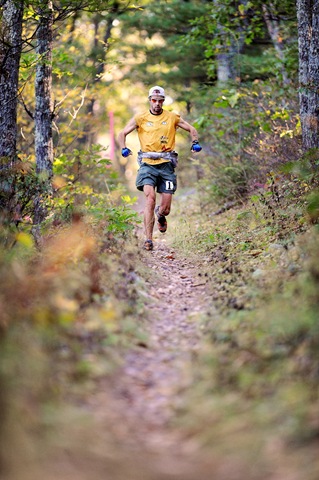
From the beginning, I wanted Grindstone to be both mountainous and personal. The course was never meant to be simply a route from start to finish. It was intended as an immersive framework for experiencing the ecology of the Alleghenies, a distinctive range within the Appalachian Mountains, in a way that could not be replicated elsewhere.
The aim was to create a genuine adventure within the structure of a 100-mile race, one that drew its character from both the landscape and the sustained effort it required. These mountains contain some of the longest sustained climbs on the East Coast, each one altering rhythm and demanding a recalibration of effort. Switchbacks are rare, gradients are honest, and the trail surface often requires full attention. The aim was not to design a race that rewarded only physical strength. It was to create a setting where endurance could be understood as the interplay between body, mind, and environment. Grindstone was built on the belief that the most meaningful miles are the ones that engage all three.
The decision to begin the 100-miler at 6:00 p.m. was deliberate. I wanted every runner, regardless of ability or pace, to pass through at least one full night on the course. Night running changes the experience in ways that daylight cannot. Vision narrows to the reach of a headlamp, sounds take on new clarity, and the mind must adjust to a slower and more deliberate perception of time. Moving through the dark requires both patience and trust, yet at times it also invites a kind of reckless abandon. In that space, the runner’s relationship to the trail changes. Many races start in the early morning, sometimes allowing the fastest athletes to finish before nightfall. Grindstone was never meant to offer that option. Only later did I learn that the original UTMB Mont-Blanc 100 (in Chamonix, France) also began at 6:00 p.m., a coincidence that underscores the shared belief that night is not simply a barrier to overcome but an essential element of the experience.
Starting and finishing at a different venue for the first fifteen years, Grindstone followed an out-and-back format. The design carried its own character and rhythm. The outbound miles were marked by anticipation and solitude, with runners settling into their own effort as the course unfolded. The return miles brought shared recognition, with brief words or nods exchanged between runners that conveyed a mutual understanding of the work already done and the distance still ahead. In 2023, when Grindstone joined the UTMB World Series, the venue moved to Natural Chimneys Park to accommodate a larger field. This change brought necessary adjustments to the course, introducing new terrain and reshaping the route to fit the available access points. In some corners of the ultrarunning community, conclusions were drawn about the race’s direction without ever seeking to understand the intent behind these changes. The current course still carries runners across much of the original trail while adding equally striking sections that extend the race’s reach into other remarkable parts of the region. The intent remains the same: to provide a course that is difficult, beautiful, and worth the time it takes to move through it.
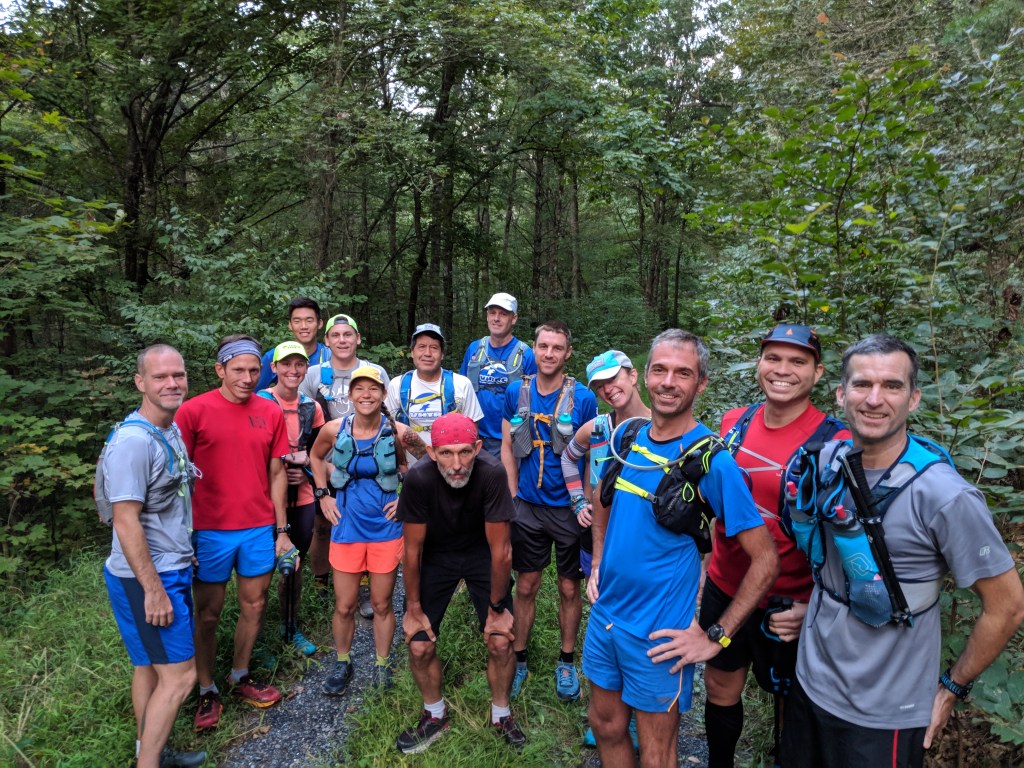
Grindstone holds a distinct position within the UTMB World Series. It is, at present, the only race in the series located on the U.S. East Coast. This placement is not simply geographic novelty; it represents an encounter with a mountain range unlike any other in the series. The Allegheny Mountains are characterized by long, folded ridgelines, deeply set valleys, and an ecological richness that shifts subtly with changes in elevation. The grandeur here is not measured in sheer vertical relief or above tree-line vistas, but in the accumulation of distinctive features: the layering of ridges in soft light, the intricate patterns of rock and root beneath the foot, and the quiet persistence of trails that have been shaped by both human passage and the changing seasons. To run here is to enter a landscape that holds beauty in both the vast and the particular, where endurance is defined as much by attention as by physical capacity.
Preparation for Grindstone requires more than a traditional training plan. Weekly mileage and vertical gain are useful metrics, but they do not fully capture what these courses will ask of you. With the exception of the 21K, each distance includes long, sustained climbs that require settling into a measured effort and maintaining it without interruption. Technical descents demand stability and concentration, especially when fatigue begins to accumulate. For the 100-mile race, hours of darkness arrive early and are unavoidable, while slower 100K runners may also encounter night running later in their race. All Grindstone courses contain a great deal of variety in surface, grade, exposure, and rhythm, which requires adaptability and the capacity to value each element for what it brings. Success here is not only about being physically prepared for the miles; it is also about being ready to engage with the complete spectrum of conditions that define the Grindstone experience.
The course begins and ends on short stretches of pavement that connect Natural Chimneys Park to the national forest. In an ideal world, the course would move directly from the start line into the forest and remain on trails until the finish. These roads exist because no other venue in the region can host an event of this scale, and there is no alternative route into the mountains. While they are not the primary draw of Grindstone, they can be valued for what they offer. The choice is pragmatic, but it need not be seen as a compromise to endure reluctantly. These are small country roads, lined with family farms that have been worked for generations. The landscape here is pastoral rather than wild, yet it carries its own kind of beauty: fields tilled by hand and machine, fencelines shaped by decades of weather, barns that lean slightly from age but remain in use. If approached with the right frame of mind, these miles can offer a kind of narrative transition: from the structured geometry of farmland into the irregular contours of the forest, and eventually back again.
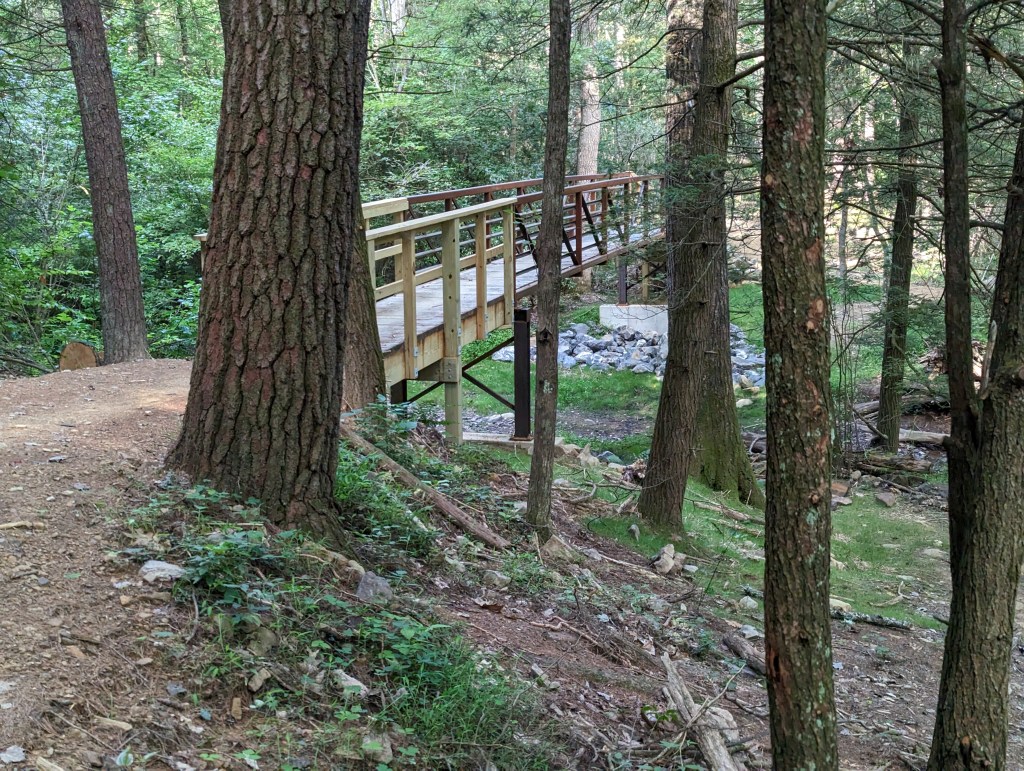
The majority of the course remains what it has always been: technical singletrack, remote ridgelines, and forested valleys that feel far removed from contemporary urban environments. The short stretches of pavement or gravel are small in proportion to the whole and serve as connections rather than interruptions. They link runners to the trails ahead and to the communities that make the race possible. Seen in this way, the roads are part of the larger ecology of place, representing the human patterns that have existed alongside the mountain landscape for generations.
The growth of ultrarunning in recent years has brought both opportunity and complexity. Larger events draw a more diverse and international field, which expands the community and deepens the level of competition. At the same time, growth can dilute the sense of connection and place that shaped the sport’s early years. Grindstone was founded to honor those roots, and that commitment remains unchanged. The race is intentionally embedded in the rhythms of its landscape, the character of its trails, and the traditions of the community that surrounds it.

Adapting to a broader stage has required logistical adjustments and new partnerships, yet these changes have been approached with the aim of strengthening, rather than replacing, the event’s identity. In this way, Grindstone continues to hold space for both the scale of modern ultrarunning and the intimacy of a race shaped by its mountains, its season, and the people who make it possible.
As the race draws near, the focus shifts from planning to presence. Grindstone is not an event that can be reduced to its profile map or aid station chart. It is a sequence of moments, each shaped by the terrain beneath your feet, the season surrounding you, and the community alongside you. The course invites both effort and observation, asking you to notice the variations in light, the movement of wind through the trees, the presence of fellow runners in shared silence or brief conversation, and the way your own thoughts change over time. In this way, preparation is not only about what you bring to the start line. It is about arriving ready to receive what the mountains, the trails, the people, and the season will give.
Grindstone was created to offer more than a race. It began as a 100-miler rooted in place, season, and community, and (2025 is its 18th edition) it has grown into the Grindstone Trail Running Festival while holding to that same intent. Every part of the course, from open valleys to remote ridgelines, is part of that encounter. To run here is to accept that endurance is shaped by more than distance. It is defined by the willingness to engage with the terrain, the weather, the night, and the people who share the journey. The finish line is a marker of completion, yet the true measure of the experience is found in the miles that came before it and the way they remain with you long after the race is over.


Leave a comment